Learn how Wärtsilä achieved:
-
45% shorter time to market
-
43% less part numbers
-
50% reduced assembly lead time


Here we focus on two key enablers for Alfa Laval’s cutting-edge Configure to Order process:
The first enabler to improve the configurability of existing products is to restructure them into modules with defined interfaces. The product structure, or architecture, is defined at a level so the modules are neither too big and complex, nor too small and numerous. The architecture is created by restructuring the existing design, without redesign, so desired business effects can be reached faster.
The second enabler is to define the modular architecture in an Information Model that feeds product data to downstream business systems, including Cost Price Quote (CPQ), Product Lifecycle Management (PLM), Computer Aided Design (CAD) and Enterprise Resource Planning (ERP).
In the Alfa Laval case, the information model is developed, executed and governed in PALMA®. PALMA stands for Product Architecture Life Cycle Management and Alfa Laval uses this enterprise solution from Modular Management to develop and communicate modular product architectures across product areas. In summary, a modular product architecture improves the configurability of the assortment and PALMA® software manages the information model and enables system integration.
Alfa Laval is a world leader in heat transfer, separation and fluid handling. The company’s global organization embraces 42 major production units and 17 000 employees in 100 countries.
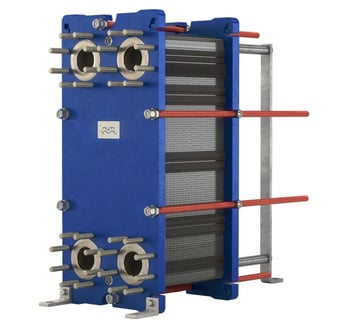
Alfa Laval’s gasketed plate-and-frame heat exchangers provide efficient heat transfer in compact equipment with a small footprint. The products are used for heating, cooling, heat recovery, evaporation and condensation. Industry applications include heating, ventilation, air conditioning, refrigeration, engine cooling, dairy and food processing, and even larger processes in the oil/chemical production and power generation. The product range is almost as broad as the industries it serves.
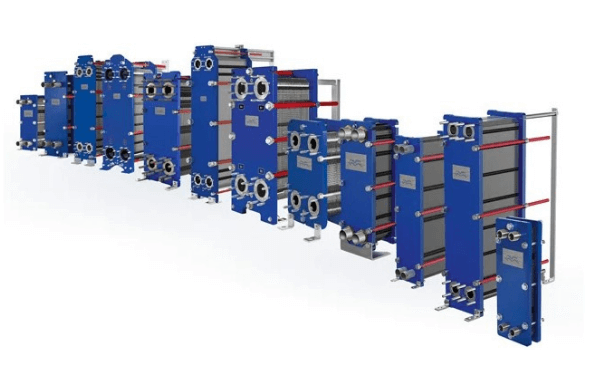
Figure 1: Part of the Alfa Laval Gasketed Plate Heat Exchanger Assortment
Over the years, the assortment has grown in line with demands for faster and more frequent launches of new, updated and customized products.
To maintain and develop this strong position, Alfa Laval realized that a fundamental change was needed in how products were structured and offered to the market.
The decision was made to introduce a more modular product architecture to enable the Configure to Order process and integrate IT solutions along the value chain. The vision was for seamless and fully-automated product handling, from CPQ via PLM into ERP
Alfa Laval uses a CPQ configurator to sell products.
Although customers increasingly want to configure their own solutions to optimize their heat exchange process, the product structure used by the configurator did not reflect the modular design of the product. This lack of configurability led to a higher resource load when creating and maintaining specifications and configuration rules. It also necessitated non-value adding activities in the organization and longer lead times for product launches. For many projects, only the most prioritized parts of the offering were implemented in the configurator. And in very big projects, only the highest volume variants were implemented. A big challenge.
Although improvements had already been made in both the product structure and configurator, several issues could only be solved by a new approach to the product rules and logic.
Heat exchangers are highly configurable products and because customized solutions are highly sought after, steps to improve configurability have the potential to deliver high value.
The configuration model at Alfa Laval had to be improved. Product logic and rules were not easily accessible, which created dependencies on product and configuration experts. This also caused delays in implementing new variants in the configurator, not to mention difficulties in getting new engineers and product managers up to speed.
Longer lead times for new product launches were primarily due to the specification workload caused by the product structure. For example, an update of a single part could require updates to thousands of specification documents. No fun and a clear downside business risk.
The product structure generally provides a good overview of modules, variants and product data. Yet in the old structure and its accompanying documentation, this overview of design variants (parts or assemblies), including where they were used, was lacking.
It was considered essential to improve governance of the product model and shorten the analysis time needed for design changes to be approved.
Due to a high degree of customization, and a less than optimal product structure, the delivery process was complex and included non-value adding activities. To reduce and avoid manual activities in the delivery process, the goal was set to integrate the sales order systems with the ERP system. The product architecture information model was to be the enabler – the common ground – to link cost and lead times. At the early stages of product configuration by customers, it was about to become clearer what could be built, at what cost (internal) and when (internal/external to customer).
There were two main goals for the order-to-delivery project:
Since gasketed plate-and-frame heat exchangers products are highly configurable to meet specific needs, customers need to be able to select a solution based on parameters ranging from capacity, flow routing, extra inlets and outlets to material choices, temperature and different pressures for the various flow media. The new configuration model had to manage this and enable a simpler and more robust solution.
The new restructured module system and configurator solution is now in place and the results are being followed closely.
Two of the main impacts are reduced workload and shorter lead time when launching new product variants.
Reductions in workload for product development and management are expected to be in the range of 15-20%, and the removal of non-value adding activities is also expected to positively contribute to employee satisfaction and competence development. When repetitive tasks are replaced by more challenging and interesting ones, work usually gets more fun.
Aside from the workload reduction, dependencies on expert product and configuration personnel will also be reduced. With fewer bottlenecks, the organization can increase efficiency and become more self-contained. A more complete offering in the configurator means less manual work in the sales and order processes and fewer Design to Order activities. In operations, manufacturing and assembly is already smoother, since orders can be built as configured.
Key enablers for smooth Configure to Order are the modular product architecture and an information model.
The modular product architecture at Alfa Laval is now clearer and better documented. Thanks to PALMA, data can be connected and communicated to CPQ, PLM and ERP business systems. 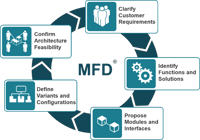
By restructuring the product with the Modular Function Development (MFD®) method, the new module system enhances the intrinsic modularity of the Alfa Laval gasketed plate heat exchanger range – and this has been achieved without any design changes. A key success factor for the new architecture has been to define the right level for the modules, neither too big nor too small, and as a result they are now more manageable.
PALMA is proprietary software from Modular Management. It has been used by Alfa Laval to create the modular product architecture and document it in information model format. In addition, PALMA is the tool for Alfa Laval engineers to maintain product data, including specifications and rules for dimensioning and performance.
PALMA has tools to execute the information and create configuration intent and logic. The user-friendly interface enables access to data in a common environment for both engineers and configuration modelers. This enhances collaboration between and enables faster development of a new configuration model.
With the integration of PALMA, and business systems including CPQ, PLM and ERP, the information model creates a digital thread throughout the value chain of Alfa Laval gasketed plate heat exchangers and eliminates manual data transfer and interpretation. As a result, Alfa Laval is now using PALMA as an enterprise solution to develop, communicate and share modular product architectures across all product areas.
45% shorter time to market
43% less part numbers
50% reduced assembly lead time
40% less part numbers
25% shorter time to market
1+ billion in added shareholder value
50% reduced design cost
25% faster construction time
50% less on-site indirect cost