

Consistently achieve your targets
Define clear KPIs and methods to guide transformation, and mobilize your organization to execute and achieve results
The HVAC industry is evolving rapidly—driven by stricter sustainability regulations, rising health and air quality demands, electrification, and the growth of smart technologies. These shifts bring complexity, but also unprecedented opportunities to innovate and stay ahead.
Health and Air Quality
Demand for fresh air and clean environments is rising. Configurable HVAC systems enable tailored solutions for air quality, ventilation, and comfort—without adding complexity.
Sustainability and Energy Efficiency
Stricter regulations and climate goals are pushing greener designs. Modular architectures make it easier to integrate energy-efficient components and adapt to evolving standards.
Electrification and Smart Technologies
Electrification and automation are reshaping HVAC. Configurable platforms allow quick integration of smart controls, sensors, and predictive maintenance features.
Data Centers and High-Demand Environments
Explosive growth in data centers requires precision cooling and scalable solutions. Configurable systems ensure rapid adaptation to high-performance requirements.
Modular architecture makes it easy to integrate IoT and smart systems into HVAC products. Standardized interfaces ensure smooth incorporation of new technologies, future-proofing your product lines.
By designing products with interchangeable modules, manufacturers can reduce the number of unique parts and streamline assembly processes, lowering costs and accelerating time-to-market.
Modular systems enable manufacturers to efficiently scale production to meet demand while offering flexible customization options.
Implementing modular design principles allows for the customization of key components while maintaining standardization where possible, reducing lead times and costs.
Modular Management's PALMA Composer and PALMA Configurator software streamline the design-to-order process, enabling rapid product configuration, design validation, and production planning. These tools ensure a seamless transition from customer requirements to detailed product specifications, reducing errors and improving efficiency in complex projects.
These products dominate the residential market, providing efficient heating and cooling for individual homes. High demand and frequent updates require manufacturers to balance efficiency with adaptability to meet consumer expectations.
Common in commercial buildings, these systems offer scalable solutions for spaces ranging from small offices to large commercial areas. Manufacturers focus on high-volume production, cost efficiency, quick installation, and regulatory compliance.
Widely used in hotels and multi-unit residential buildings, PTACs are typically manufactured in large batches and sold through distributors with an emphasis on standardization and ease of installation.
Typically found in industrial and large-scale commercial settings, chillers are highly customized to meet specific project requirements. These systems involve detailed engineering and long lead times, prioritizing performance, reliability, and energy efficiency.
These systems are often designed to order, tailored to the specific needs of manufacturing plants, data centers, and other critical applications. The focus is on customization, operational efficiency, and robust performance.
Air-Tech specializes in advanced air handling, filtration, and ventilation systems for healthcare, industrial, and cleanroom environments. Its solutions prioritize energy efficiency, modularity, and high-performance filtration to meet strict air quality standards.
Modular Management, through its platform PALMA, offers a range of solutions tailored to support appliance manufacturers in overcoming industry obstacles, driving growth, and staying ahead of the competition.
Modular architecture offers a strategic advantage by accelerating product development, lowering costs, increasing flexibility, enhancing product variety, improving sustainability, and enabling the seamless integration of new technologies. These benefits help companies stay competitive and responsive to market demands.
Reduce product development time by implementing modular design principles that enable faster prototyping and easier customization.
Lower production costs and streamline operations by standardizing components and reducing part numbers.
Quickly adapt to regulatory changes and evolving consumer demands with a flexible, modular product system.
A modular approach expands product lines by combining modules to meet diverse market needs. This strategy enables mass customization, delivering tailored solutions efficiently and cost-effectively.
Design products with modular components that are easier to upgrade, repair, and recycle, supporting sustainability goals.
Integrate new technologies faster with modular design principles that make it easy to add smart features, IoT, and AI without extensive redesigns
Whirlpool, one of the world’s larger appliance manufacturers, partnered with Modular Management to tackle the growing complexity across its vast product portfolio. Facing challenges from global competition and internal inefficiencies, Whirlpool implemented a Modular Product Architecture strategy, starting with microwave ovens and eventually expanding across all product lines. Over an eight-year engagement, this transformation led to a 40% reduction in part numbers, a 25% decrease in product development time, and over $1 billion in added shareholder value. This strategic shift allowed Whirlpool to maintain its market leadership while significantly improving profitability.
The HVAC and AirTech industry is evolving fast. These shifts aren’t just challenges—they’re openings for growth. Companies that act now can turn complexity into speed, flexibility, and profitability.
Here are four key opportunities to seize:
A large portfolio can feel like a strength—but too many variants drive cost and slow agility.
Your Path Forward
Rationalize your portfolio with configurable architectures that reduce variants while preserving customer choice.
Modularity is a great start—but real value comes when it enables configurable products that deliver speed, flexibility, and efficiency.
Your Path Forward
Transform modular platforms into configurable architectures with clear governance, smart rules, and digital tools.
Your Path Forward
Shift from bespoke engineering to configure to order.
In fast-moving markets, speed is the difference between leading and lagging.
Your Path Forward
Design configurable architectures that accelerate launches and enable rapid adaptation.
Complexity is costing HVAC manufacturers time and profit. See how modular product architecture helps simplify portfolios, lower costs, and accelerate growth.
Custom designs come at a cost. Learn how leading HVAC companies are reducing engineering time and increasing margins by moving from ETO to CTO.
Long lead times are holding HVAC manufacturers back. See how leading companies cut delivery times by 50%—reducing costs, improving customer satisfaction, and accelerating growth.
Connect strategy to actions
Drive transformation by aligning stakeholders around a shared vision and leveraging modular strategies that connect value to planning.
Consistently achieve your targets
Define clear KPIs and methods to guide transformation, and mobilize your organization to execute and achieve results
Master complexity
Integrate market drivers, strategy, and functional needs into products to expand offerings while managing cost and complexity
Act with agility and flexibility
Develop optimal solutions and manage the full configuration lifecycle to maximize business value
Create effective ways of working
Secure module-centric, configuration-enabled operations with clear roles and decision models to govern architecture.
Operate with clarity
Link strategy to modules and processes, and establish structures and ways of working to deliver exceptional outcome
Drive business with unified information
Implement a flexible product information model and use leading technology to create a seamless digital thread across all functions.We start by understanding your goals and the challenges that matter most. From there, we identify the high-impact opportunities that accelerate both short-term wins and long-term growth.
Our method uses modularization as the foundation for configurability—creating structured product architectures that enable flexibility, speed, and cost efficiency. This approach transforms complexity into scalable, customer-focused solutions.
To manage and execute these configurations, we leverage PALMA, our purpose-built Product Configuration Platform. PALMA unifies information, applies smart configuration rules, and ensures governance, making your product strategy future-ready and digitally enabled.

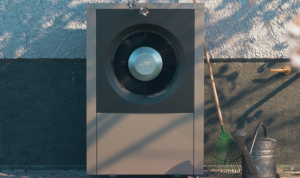
Bosch transformed its product development and operations with a comprehensive modularity program. By introducing modular architectures, lean manufacturing, and late-point differentiation, the company streamlined production and accelerated innovation.
The result was the AirX family—the quietest and most energy-efficient air-to-water heat pump ever built. This transformation not only strengthened Bosch’s cost structure and productivity but also restored its competitive edge, driving double-digit market growth.

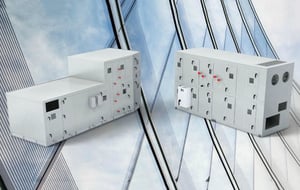
Trane Commercial Air Handlers faced mounting pressures—rising costs, aging product families, increasing energy-efficiency requirements, and fierce competition with new features and options. Traditional improvements through lean and automation were not enough to maintain its long-held leadership.
By implementing a modularity program, Trane achieved breakthrough results. The new air handler line became the most energy-efficient on the market, reducing energy consumption by up to 30% while delivering greater product variety and lower ownership costs for customers. With modular designs, Trane successfully defended its market leadership and strengthened its competitive advantage.
Cost and Revenue Impact
With brand strategies driving market volumes and price premiums, the cost side results were significant:
35% reduction in unique parts
25% fewer parts per product
20% reduction in parts costs
40% fewer platforms
10% material cost reductions.
Although harder to identify causality, quantifiable market impacts were also considered remarkable, including significant brand price premiums that even exceeded the cost side results.
Cut Time To Market by 50%
To overcome challenges like acquisitions, regional product variations, and low-cost competition, Husqvarna needed to rationalize part numbers, lower costs, and globalize product design. Partnering with Modular Management, Husqvarna implemented a modular design strategy for two leading electric string trimmer brands, achieving annual sales of over 500,000 units.
Results Achieved with Modular Design:
50% faster time to market for new SKUs.
25% reduction in manufacturing costs.
50% fewer resources needed to develop new products.
Significant increase in EBIT margin, even amidst fierce competition.
Reduced inventory levels across the supply chain while maintaining low service call rates.
Business Value Delivered:
Developed a profitable entry-level product.
Freed up resources for more new product development.
Successfully entered new markets with unique product variants.
Cut Time To Market by 50%
To overcome challenges like acquisitions, regional product variations, and low-cost competition, Husqvarna needed to rationalize part numbers, lower costs, and globalize product design. Partnering with Modular Management, Husqvarna implemented a modular design strategy for two leading electric string trimmer brands, achieving annual sales of over 500,000 units.
Results Achieved with Modular Design:
50% faster time to market for new SKUs.
25% reduction in manufacturing costs.
50% fewer resources needed to develop new products.
Significant increase in EBIT margin, even amidst fierce competition.
Reduced inventory levels across the supply chain while maintaining low service call rates.
Business Value Delivered:
Developed a profitable entry-level product.
Freed up resources for more new product development.
Successfully entered new markets with unique product variants.
Facing rising complexity and fierce competition, Husqvarna partnered with Modular Management to streamline their electric string trimmer product lines. By implementing a modular product architecture, Husqvarna was able to reduce part numbers by 40%, decrease manufacturing costs by up to 25%, and cut time-to-market for new SKUs by 50%. This strategic shift not only improved operational efficiency but also strengthened Husqvarna’s ability to compete in a challenging market, leading to significant gains in EBIT margins and market share.
Empowering leading industries worldwide – Customers across the globe trust Modular Management to drive growth and innovation
The story explores the challenges of creating customer personas, fostering cross-functional collaboration, and utilizing analytics to optimize market representation. Discover how JCH leverages modularity and strategic insights to drive growth in a rapidly evolving market.
Many residential HVAC manufacturers are stuck in a complexity spiral—expanding product variety to meet demand, but driving up engineering work, supply chain issues, and manufacturing costs. Learn how modular product architecture helps reduce complexity, lower costs, and grow portfolios more efficiently...
If your HVAC business is based on Engineering-to-Order (ETO), you’re constantly designing and validating custom solutions. That level of customization sounds great—until you realize it comes at a massive cost. Learn how switching from Engineer-to-Order (ETO) to Configure-to-Order (CTO) can cut costs and enhance profitability for HVAC manufacturers...
For HVAC manufacturers operating with an Engineer-to-Order (ETO) model, long lead times are a persistent problem. From initial inquiry to final delivery, every step—custom engineering, procurement, manufacturing, and testing—adds delays that frustrate customers and increase operational costs. Discover how HVAC manufacturers cut lead times by 50%...