<img height="1" width="1" style="display:none" src="https://www.facebook.com/tr?id=1491912051620464&amp;ev=PageView&amp;noscript=1">

Building the Next Generation of Industrial Automation

A Practical Path to Flexibility, Intelligence, and Resilience

Industrial Automation: Scaling Intelligence and Flexibility

Industrial automation is shifting toward more connected, software-driven, and data-intensive systems. Demand for higher efficiency, flexibility, and reliability is accelerating the adoption of smart technologies, while AI, edge computing, and advanced instrumentation are increasing system complexity. The opportunity lies in structuring automation solutions to be modular and configurable from the start. This makes it easier to integrate new technologies, scale across applications, and adapt over time—providing a solid foundation for faster innovation, resilient operations, and long-term competitiveness.

Industry Drivers and Opportunities:

6

Modernize for Flexibility

Rigid and aging automation systems limit responsiveness and scalability. Modular, configurable platforms enable incremental upgrades, reduce engineering rework, and allow faster adaptation to changing production and market demands.


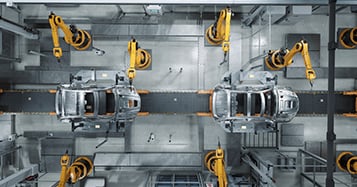
How to Design for Agile Line Production - 357x187

Scale Smart Factories


The shift toward smart factories and connected operations is accelerating. Modular architectures simplify integration of machines, sensors, and systems, making it easier to scale intelligence across plants without increasing complexity or risk.

2

Turn Data into Intelligence

Industrial systems generate vast amounts of data, yet much remains underutilized. Configurable architectures enable AI, analytics, and edge computing to support predictive maintenance, adaptive processes, and continuous improvement—without starting over.


4

Secure and Connect Systems

Growing connectivity increases cybersecurity and integration challenges.  Automation systems must evolve quickly to meet new cybersecurity requirements.  Monolithic architectures slow critical updates, while modular system structures allow faster deployment, stronger protection, and seamless integration across technologies 

From ETO to CTO — a practical manufacturer’s guide

Learn how manufacturers reduce lead times, improve predictability, and scale without adding complexity

Change Creates Opportunity — Are You Ready to Capture It?

At Modular Management, we empower businesses to turn change into opportunity. 

We specialize in modularity and configuration, embedding adaptability and resilience into every corner of your business — from strategy and products to processes and people. By simplifying complexity and building flexible systems of strategic building blocks, we enable your business to scale, innovate, and thrive.

Your Goals, Our Starting Point

We begin by understanding your priorities — the goals you want to achieve and the challenges that matter most. From there, we identify high-impact opportunities that deliver quick wins and set the stage for sustainable growth.

Modularization: The Foundation for Configurability

Our approach starts with modularization, creating structured product architectures that make configurability possible. This foundation unlocks flexibility, accelerates speed to market, and drives cost efficiency — transforming complexity into scalable, customer-focused solutions.

Smart Configuration Where it Matters With PALMA

To manage and execute these configurations, we use PALMA, our purpose-built Product Configuration Platform. PALMA unifies data, applies smart configuration rules, and ensures governance — making your product strategy future-ready and digitally enabled.

Business Composability GIF


What You Can Achieve with Us:

Industrial Robotics Manufacturer Case Story:

Scaling Growth While Reducing Complexity

A leading global manufacturer of industrial robots and robot software faced a market inflection point. Rising labor costs, increasing quality demands, and growing pressure on cost and delivery speed were driving a rapid increase in demand for automation. While growth opportunities were clear, the company needed a way to expand its portfolio, protect margins, and accelerate delivery without letting product and software complexity spiral out of control.

The Challenge

Demand for robots was accelerating, but existing product architectures limited scalability. Controller variants, robot arm assortments, and software development were tightly coupled, driving part proliferation, slow feature releases, and operational inefficiencies. The executive team needed to grow assortment, speed up innovation, and scale production capacity—while reducing cost and complexity.  
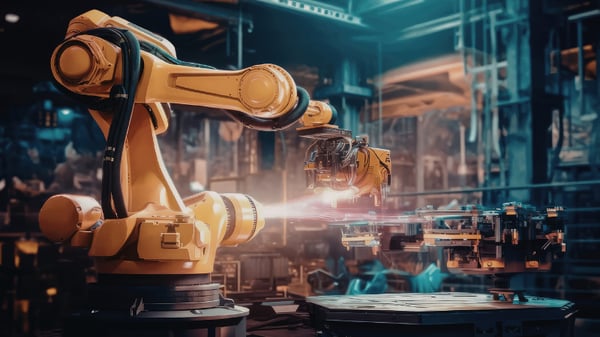
 Image is AI generated and has nothing to do with the manufacturer mentioned in the case.

The Solution

Modular Management and the manufacturer partnered to establish a modularization program covering hardware, software, and operations:

  • A business-driven modularity strategy aligned to growth and cost targets

  • Customer-led market segmentation to steer portfolio and architecture decisions

  • Modular product architectures for controllers, robot arms, and software

  • Modular Function Deployment to embed customer value and strategy into modules

  • A decoupled software architecture enabling faster, independent feature releases

  • Operational changes to support scalable, automated production

Outcomes

 300% increase in controller cabinet variants without added complexity 
 
50% reduction in unique parts for controllers
 
50% reduction in the size of the smallest controller
 
50% expansion of robot arm assortment
 
Quadrupled production capacity with fewer production lines

Insights to Help You Navigate Complexity

Practical Roadmap for Product Modularity

This practical roadmap will guide you step by step through building a modular product architecture that works for your business. 

Complexity Scorecard for Optimized Product Assortment

This Complexity Scorecard helps you evaluate whether your current approach truly optimizes your product architecture or simply reduces numbers without addressing root causes.

Best Practices for Software Architecture in Hardware Companies

Traditional hardware companies are increasingly becoming software-centric, making effective software architecture essential to compete and innovate in connected products and automation systems. 

Trusted by Industry Leaders Worldwide

Wärtsilä 200x100
Metso 200x100
ABB 200x100
Mabe 200x100
Permobil 200x100
Uhlmann 200x100
Valmet  200x100
Alfa Laval 200x100
Oilon 200x100
Körber 200x100
Volvo Trucks 200x100

Talk to Our Experts

Luther Johnson

Luther Johnson

President Modular Management North America

Email
LinkedIn

EK

Erik Kärnekull

Manager

Edward Rinaldi

Edward Rinaldi

Director of Sales 

A conversation is the best place to start

Tell us what you’re working on — we’ll take it from there.